October 20, 2026 | The Law Office of William S. Smith | Second Amendment Commentary http://www.attorneysmithlaw.com (774) 317-9287
William Smith, Esq.
In a significant setback for the Second Amendment rights of young adults, the Massachusetts Supreme Judicial Court today upheld the Commonwealth’s prohibition against issuing licenses to carry firearms to otherwise qualified adults between the ages of 18 and 20. In Commonwealth v. Thomson, SJC-13856 (October 20, 2026), a divided Court concluded that Massachusetts’s age-based firearms licensing restriction is consistent with the nation’s historical tradition of firearm regulation.
The decision, reached by a 5–2 majority, raises serious questions about whether Massachusetts’s highest court is faithfully applying the constitutional framework established by the United States Supreme Court in New York State Rifle & Pistol Association, Inc. v. Bruen, 597 U.S. 1 (2022), or instead interpreting historical regulations at such a high level of generality that virtually any modern firearms restriction can be justified.
Particularly troubling is the majority’s reliance upon colonial and early American militia laws as historical analogues for Massachusetts’s modern prohibition against licensed handgun carrying by adults under 21. When those historical laws are examined under the actual methodology required by Bruen, the supposed similarities become exceedingly difficult to defend.
Indeed, the historical laws relied upon by the SJC arguably fail both essential components of the Supreme Court’s historical inquiry: the “how” and the “why.”
What the SJC decided
The case arose from the prosecution of Mikai Thomson, who was 20 years old when police encountered him during a traffic stop in Boston in December 2021. Thomson fled from police and discarded a loaded handgun. He was subsequently convicted of carrying a firearm without a license, among other offenses.
Under Massachusetts law, an individual must be at least 21 years old to obtain a license to carry a handgun. Consequently, even an otherwise responsible, law-abiding 18-, 19-, or 20-year-old adult cannot obtain such a license.
Thomson challenged the constitutionality of that restriction under the Second Amendment. Although the SJC concluded that his failure to apply for a license prevented his particular as-applied challenge from proceeding, it considered and rejected his facial constitutional challenge.
The majority reasoned that the Commonwealth’s graduated system of firearm access, which permits certain younger individuals to possess or use firearms under limited circumstances while reserving handgun carry licenses for those 21 and older, resembles historical practices that placed young people’s access to weapons under adult supervision.
In reaching that conclusion, the majority relied upon colonial militia practices, historical principles concerning the legal capacity of minors, and the Eleventh Circuit’s decision in National Rifle Association v. Bondi, 133 F.4th 1108 (11th Cir. 2025) (en banc), which upheld Florida’s restriction on firearm sales to individuals under 21.
But the constitutional question is not whether government historically exercised some authority over young people or whether firearms were subject to regulation. The question is whether the Commonwealth has demonstrated a sufficiently analogous historical tradition supporting the particular burden imposed upon the constitutional right today.
The fundamental problem: Bruen requires an examination of both “how” and “why”
The Supreme Court’s decision in Bruen did not authorize courts to uphold modern firearm restrictions merely because governments historically regulated firearms in some manner. Rather, it established a specific constitutional methodology requiring the government to demonstrate that its challenged regulation is consistent with the historical understanding of the Second Amendment.
Importantly, the Supreme Court explained that determining whether a historical regulation is sufficiently analogous to a modern restriction requires examining two central considerations: how the regulations burden the right of armed self-defense and why they impose that burden. Bruen, 597 U.S. at 29.
The Supreme Court subsequently reaffirmed the importance of these considerations in United States v. Rahimi, 602 U.S. 680 (2024), explaining that the historical inquiry seeks relevantly similar principles rather than identical historical statutes.
That qualification, however, cannot become an excuse for abandoning meaningful historical comparison altogether. Although Bruen does not require a historical twin, neither does it permit courts to identify an extremely general governmental objective, such as promoting public safety, and then declare virtually any modern restriction constitutional because some historical law arguably pursued the same objective.
If that were sufficient, Bruen’s historical inquiry would accomplish little. Nearly every firearms restriction ever enacted can be characterized as an effort to promote public safety.
The critical question is whether the historical laws actually restricted the constitutional right in a manner comparable to the modern law, and whether they did so for a sufficiently comparable reason.
In Thomson, there are compelling arguments that the historical militia laws relied upon by the SJC satisfy neither requirement.
The “how” is fundamentally different: Colonial militia laws armed young men; Massachusetts now disarms them
Perhaps the most striking weakness in the majority’s historical analysis is its reliance upon colonial and early American militia laws.
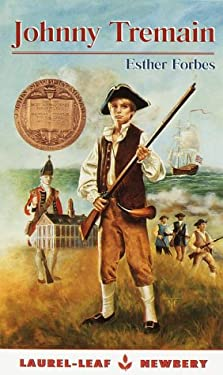
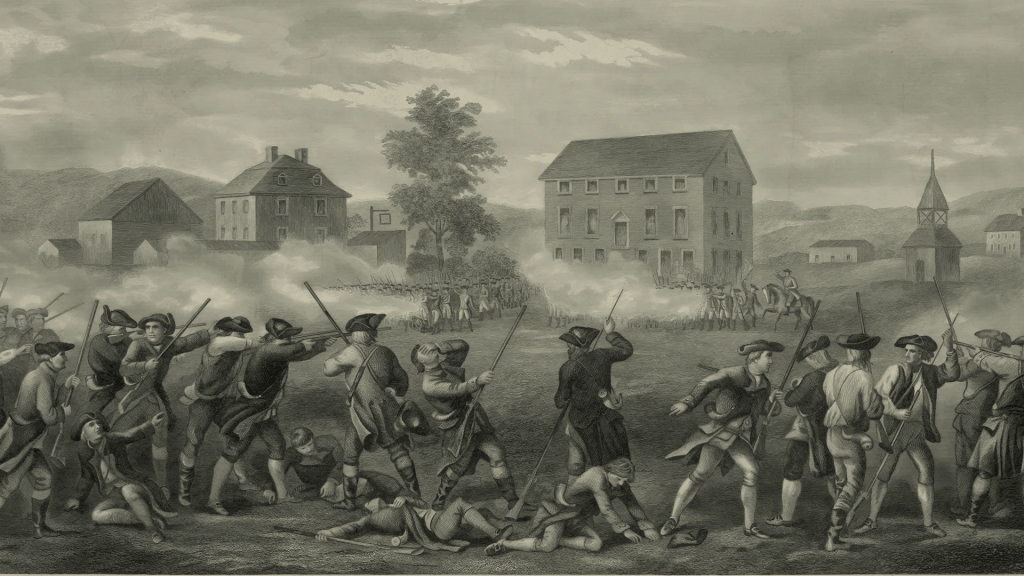
Those laws did not establish a general prohibition against firearm possession by 18-to-20-year-old adults. Quite the opposite: militia laws frequently required young men, including individuals under 21, to participate in military service and to be armed.
Indeed, the Massachusetts militia law of 1775–1776 contemplated military participation beginning at age sixteen. The historical framework therefore recognized that individuals considerably younger than 21 could possess and use firearms in fulfilling their militia obligations.
The majority emphasizes that younger militia members sometimes received weapons from parents, masters, or local authorities and were subject to military supervision. But this reasoning conflates the regulation of organized military service with the regulation of a civilian’s independent constitutional right to possess and carry arms for self-defense.
These are fundamentally different governmental activities.
Historical militia laws were principally concerned with ensuring that a functioning militia could be assembled, equipped, trained, and commanded. They regulated the obligations and conduct of persons performing military service.
Modern Massachusetts law, by contrast, categorically prevents otherwise qualified adults under 21 from obtaining a license to carry a handgun for ordinary civilian self-defense.
Under the historical militia system, young men were expected to be armed in service of the community. Under the modern Massachusetts licensing system, the same age group is prohibited from obtaining the authorization necessary to carry handguns for their own defense.
That is not a minor historical distinction. It goes directly to the constitutionally essential question of how the challenged law burdens the right to keep and bear arms.
A law that requires or facilitates the arming of young adults cannot automatically serve as an analogue for a law that categorically prohibits those same young adults from obtaining a license to carry handguns.
The two laws operate in materially different, and arguably opposite, ways.
The supervision of militia members by military officers also cannot reasonably be equated with a general prohibition against independent civilian handgun carrying. Military command necessarily involves supervision, training, discipline, and control over the activities of those serving within an organized military unit.
That does not establish a historical tradition permitting government to prohibit an entire class of otherwise law-abiding adults from carrying firearms outside that military context.
To conclude otherwise would transform virtually every historical military regulation into a justification for restrictions upon civilian gun ownership.
And that is precisely the sort of overly generalized historical reasoning that Bruen was intended to prevent.
Even the “why” is different: Military readiness is not a general prohibition based on presumed immaturity
The historical analogy becomes even less persuasive when one examines the second component of Bruen’s analysis: why the historical and modern laws imposed their respective requirements.
The historical militia laws were designed principally to ensure that the community possessed an organized, adequately equipped, and effective military force.
The underlying governmental interest was military preparedness and collective defense.
Requirements concerning the furnishing of weapons, the organization of militia units, and the supervision of military service were means of accomplishing those objectives.
Massachusetts’s modern age restriction, however, serves a substantially different purpose. As the Thomson majority explains, the contemporary statutory scheme reflects legislative judgments concerning the maturity, responsibility, and supposed ability of younger individuals to possess and use firearms safely.
In other words, the modern restriction rests upon a generalized presumption that individuals between 18 and 20 are insufficiently mature to be entrusted with the independent carrying of handguns.
But the historical militia laws do not necessarily reflect that presumption at all.
Indeed, they arguably reflect the opposite judgment.
A society that required 16-, 17-, 18-, 19-, and 20-year-old men to undertake armed military responsibilities was hardly expressing the categorical view that individuals of those ages were inherently incapable of responsibly handling firearms.
The fact that militia service involved military supervision does not change the underlying purpose of those laws. Supervision was a feature of military organization, not necessarily a declaration that young adults were categorically unfit to exercise an individual constitutional right.
Thus, the modern law’s asserted purpose of protecting society from the presumed immaturity of young adults is not necessarily analogous to the historical militia laws’ purpose of ensuring that young men were adequately armed and organized for military service.
The historical laws sought to put weapons into the hands of young men for collective defense. The modern Massachusetts law prevents those same young adults from obtaining handgun carry licenses for individual defense.
Both the means and the objectives are materially different.
The majority’s reasoning arguably depends upon defining the purpose of both sets of laws at such a sweeping level of generality — the government historically regulated young people’s access to weapons — that the specific historical reasons for the regulations become almost irrelevant.
But if the “why” inquiry can be satisfied simply by invoking governmental concern for young people’s safety, while the “how” inquiry can be satisfied by pointing to any historical form of adult supervision, then Bruen’s two-part analogical inquiry risks becoming little more than an exercise in finding historical references that support a predetermined result.
That is not the rigorous constitutional analysis the Supreme Court prescribed.
The dissent recognizes the danger of an inadequate historical record
Justice Scott Kafker, joined by Justice Dalila Wendlandt, dissented from the majority’s resolution of the constitutional question.
The dissent did not definitively conclude that Massachusetts’s age restriction was unconstitutional. Rather, it argued that the Court should not decide such an important and historically complicated constitutional issue without a more thoroughly developed record, including additional historical evidence and expert analysis.
That concern is particularly important given the majority’s reliance upon historical materials and interpretations that were not fully developed through adversarial presentation.
The dissent also identified the significant distinction between Bondi, which concerned restrictions on firearm purchases, and Thomson, which concerned criminal punishment for carrying a firearm without a license.
The distinction matters. A historical or modern restriction upon a particular commercial method of acquiring a firearm does not necessarily establish a tradition supporting a categorical prohibition against carrying one.
The dissent’s position was therefore a measured one: before declaring that a modern restriction upon a fundamental constitutional right is supported by historical tradition, courts should ensure that the historical evidence actually supports that conclusion.
That is especially appropriate where other Federal courts of appeals have reached different conclusions concerning restrictions affecting adults under 21.
The broader constitutional problem: Government cannot simply presume that an entire class of adults is dangerous
There is another troubling aspect of the reasoning underlying Thomson.
The Commonwealth’s restriction does not require any individualized finding that a particular 18-, 19-, or 20-year-old is violent, threatening, irresponsible, or otherwise dangerous.
A 20-year-old who has never committed a crime, who has completed extensive firearms training, who possesses substantial experience safely handling weapons, and who otherwise satisfies every substantive qualification for a license is nevertheless categorically excluded.
The restriction applies not because the individual has demonstrated dangerousness, but because the Legislature has determined that everyone within the age category must wait until reaching 21. That distinction is immensely constitutionally significant.
In Rahimi, the Supreme Court upheld a firearms restriction involving an individual who had been found by a court to pose a credible threat to another person’s physical safety. The Court’s reasoning drew upon historical traditions involving the disarmament or restraint of persons who presented identifiable threats.
That is a far different proposition from disarming an entire class of adults based upon a generalized assumption of immaturity.
Of course, the Commonwealth may argue that historical laws recognized distinctions between minors and adults, and that the age of majority was traditionally 21. That argument deserves consideration. But historical rules concerning contractual capacity, parental authority, and other aspects of civil minority do not automatically establish a tradition of prohibiting the possession or carrying of firearms for lawful self-defense.
Nor does the existence of age restrictions in other constitutional or statutory contexts resolve the Second Amendment question.
The Constitution itself establishes specific minimum ages for certain federal offices. It does not expressly impose a minimum age of 21 upon the right to keep and bear arms.
Ultimately, the Commonwealth must demonstrate a relevant historical tradition supporting the particular firearms restriction being challenged. A generalized appeal to legislative judgments about maturity should not substitute for that demonstration.
The implications for Massachusetts firearms licensing and Pratt v. Westbrook
The decision also raises broader concerns about the SJC’s approach to Second Amendment litigation, including the constitutional challenges to Massachusetts’s subjective firearms licensing standards raised in my Pratt v. Westbrook case, currently pending before the Court.
Although Thomson concerns an age-based categorical restriction rather than the discretionary determination of whether an applicant is unsuitable to possess or carry firearms, both cases implicate a fundamental constitutional question: How much authority does government possess to deny the exercise of a constitutional right based upon generalized predictions of future risk?
In Pratt v. Westbrook, I have challenged Massachusetts’s firearms licensing framework, including the constitutionality of subjective unsuitability determinations under the Second and Fourteenth Amendments.
The concern presented by Thomson is that historical analogy may become so expansive that courts effectively permit the Legislature to determine the scope of a constitutional right by invoking broad public safety objectives.
But Bruen expressly rejected the use of free-ranging judicial interest balancing as the means of determining whether a firearms restriction violates the Second Amendment.
The constitutional question is not whether judges believe a particular firearms restriction is prudent, desirable, or likely to promote public safety.
It is whether the government can demonstrate that the restriction is consistent with the historical tradition that defines the permissible boundaries of the right.
And while Thomson may provide the Commonwealth with additional language concerning legislative judgments and firearms safety, it does not decide the constitutionality of Massachusetts’s subjective unsuitability regime.
The distinction between an objective age requirement and an individualized discretionary licensing determination remains substantial. Bruen itself specifically warned against licensing systems that vest officials with open-ended discretion to determine whether an individual may exercise the right to carry arms.
That constitutional issue remains central to the challenge presented in Pratt v. Westbrook.
Conclusion: Historical analogy must mean more than finding something in history involving firearms
The SJC’s decision in Commonwealth v. Thomson illustrates a growing concern in post-Bruen Second Amendment litigation: the danger that historical analogies will be stretched so broadly by courts that the historical test loses its constitutional force.
There is a profound difference between acknowledging that firearms were historically regulated and demonstrating that a particular modern firearms prohibition is consistent with the nation’s historical tradition.
Colonial militia laws that required young men to serve, provided for their armament, and subjected military personnel to supervision do not readily establish a tradition of prohibiting otherwise qualified adults under 21 from carrying handguns for civilian self-defense.
The “how” is materially different because the historical laws facilitated armed service while the modern restriction prohibits licensed handgun carrying.
The “why” is materially different because the historical laws principally sought military preparedness, while the modern restriction rests upon legislative assumptions concerning maturity and the risks of civilian firearm possession.
Those distinctions should not be dismissed simply because both historical and modern laws involve young people and firearms.
The Supreme Court made clear in Bruen that the Second Amendment is not a second-class constitutional right. Courts must therefore apply the historical inquiry with the same seriousness that they would apply constitutional protections involving speech, religion, or other fundamental liberties.
Today’s decision may represent the final word on this particular constitutional challenge within the Massachusetts judiciary, but it will not be the final word under the United States Constitution if the U.S. Supreme Court takes up the issue.
A historical tradition of requiring young Americans to bear arms should not so easily be transformed into constitutional permission to prohibit them from doing so.
That is the fundamental contradiction at the heart of Commonwealth v. Thomson.


Leave a Reply