On April 2, 2026, Massachusetts quietly crossed a very important line in firearms regulation. Under the Commonwealth’s sweeping “Act Modernizing Firearms Laws,” the state imposed a new, more demanding training regime for anyone seeking a License to Carry (LTC) or Firearms Identification Card (FID). At the center of these changes is a requirement that applicants complete live-fire training—apparently meaning they must actually handle and discharge a firearm as part of their certification process.
At first glance, that might not sound particularly controversial. After all, firearms ownership inherently involves responsibility, and many gun owners already seek out hands-on instruction. But beneath the surface lies a far more consequential question: what does “live fire training” become next? And, as a lawyer I am bound to ask: Exactly what historical tradition of firearms regulation existed circa 1791-1868 wherein Americans deemed to be not sufficiently “proficient” with a firearm were denied the right to possess one? There was none, which is why this fails the Bruen test hands-down (no pun intended).
The New Requirement: A Shift From Classroom to Range
The updated law expands the traditional classroom-based safety course into something more comprehensive. Applicants must now complete instruction that includes not just legal and safety concepts, but actual shooting experience.
Municipal guidance across Massachusetts reflects this shift clearly: after April 2, 2026, firearms safety courses must include a live-fire component to qualify for licensure.
Even more telling is what the state has not done. As of the law’s rollout, there remains no uniform statewide curriculum or qualification standard for the live-fire portion, and implementation details are still evolving. This is perhaps congruent with the state’s “unsuitability” standard which similarly contains no objective criteria.
That lack of clarity is not a minor administrative hiccup—it is the entire story.
Training vs. Testing: A Line That Matters
Right now, the Commonwealth frames live fire as instruction. In other words, applicants must participate, not necessarily perform.
But Massachusetts history—and common sense—suggests this is unlikely to remain the case.
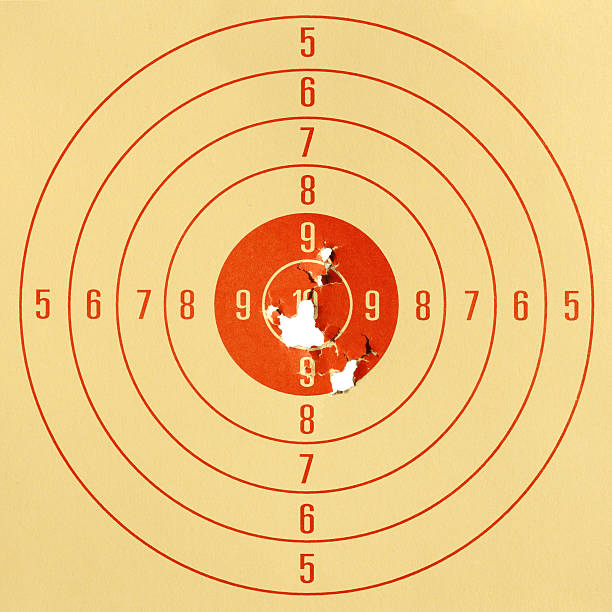
Once the infrastructure exists to require live-fire participation, it is a very small step to impose live-fire performance standards:
- Minimum accuracy thresholds
- Timed shooting requirements
- Pass/fail scoring systems
And once those are introduced, the nature of the right itself begins to change. The Second Amendment becomes contingent not on lawful eligibility, but on state-administered proficiency testing. Yet one more pretext added to the list to deny and take away this right to as many Massachusetts residents as humanly possible.
That is not speculation—it is the logical progression of regulatory systems. First comes exposure, then evaluation, then exclusion.
The Problem: A Right Conditioned on Performance
The danger here is not the existence of training. It is the transformation of training into a gatekeeping mechanism.
The Supreme Court’s decision in New York State Rifle & Pistol Association v. Bruen made clear that the right to bear arms cannot be subjected to discretionary or burdensome licensing schemes untethered from historical tradition. Conditioning that right on passing a state-designed shooting test would raise serious constitutional concerns.
Think about what that would mean in practice:
- Individuals with limited financial means could be excluded due to repeated testing costs
- Elderly or disabled applicants could be disqualified based on physical performance
- Access to the right would depend on availability of certified ranges and instructors
At that point, the issue is no longer safety—it is rationing a constitutional right.
A Striking Comparison: Police Standards
Perhaps the most revealing aspect of this debate is what the state does not require of its own agents.
Most police departments do not condition employment or continued service on passing a high-precision, high-score live-fire test for basic qualification purposes in the same way a hypothetical civilian licensing scheme might. Officers are trained and periodically qualified, yes—but the system is designed around professional readiness, not denying the baseline authority to possess a firearm. From all I have seen, most annual firearms “qualifying” for police departments consists of their going to the range together and each discharging their handgun x number of times (I have heard 20 or 25 typically).
In other words, the state risks creating a paradox:
The ordinary citizen may soon face stricter barriers to exercising a constitutional right than the state imposes on its own armed agents.
That inversion should give extreme pause to anyone concerned with constitutional balance.
The Real Issue: Incrementalism
Supporters of the new law will argue that live-fire training is simply about safety. And in isolation, that argument has some intuitive appeal.
But firearms regulation in Massachusetts has never been about isolated steps—it has been about incremental expansion:
- First, mandatory courses
- Then expanded curriculum
- Now live-fire participation
- Next? Performance-based qualification
Each step, taken alone, can be defended. Taken together, they form a system that increasingly conditions the exercise of a fundamental right on compliance with ever-changing regulatory benchmarks.
Conclusion: A Warning, Not a Rejection of Training
To be clear, responsible firearms training is not the enemy. Many gun owners already seek it out voluntarily, and live-fire instruction can be valuable.
The concern is not the existence of training—it is the trajectory of the requirement.
Today, Massachusetts requires that you fire a gun as part of a course.
Tomorrow, it may require that you pass.
And when that happens, the Commonwealth will have crossed a constitutional line—from ensuring familiarity with firearms to conditioning the right itself on state-approved performance.
That is not modernization. That is transformation.
And, frankly, it deserves far closer scrutiny than it has received so far from gun rights groups and gun owners.


Leave a Reply