Date: November 13, 2025
The right to keep and bear arms is under constant pressure from laws that purport to promote “public safety” but end up undermining self-defense, individual liberties, and the plain meaning of the Second Amendment. The recent decision by a Georgia judge in Savannah striking down the city’s ordinance on firearms in vehicles offers both a victory and a warning for gun owners nationwide. At the same time, the much more draconian regime in Massachusetts remains a cautionary tale about how far states can often push before the fundamental right becomes second-class. as it presently is in Massachusetts, Bruen notwithstanding.
The Georgia decision: a win for gun-owners, but only for now
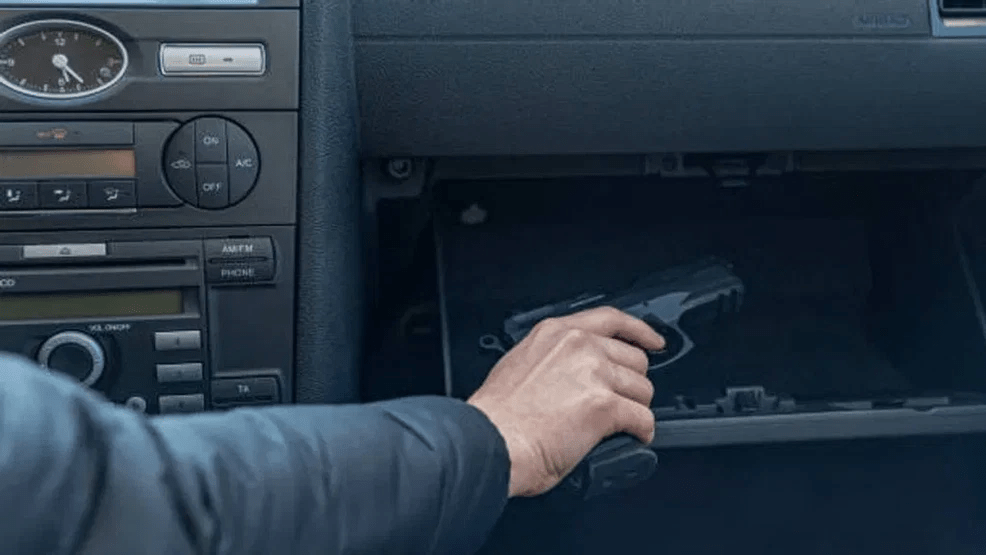
In Savannah, the city council adopted an ordinance in April 2024 requiring that guns left in vehicles be kept in a locked compartment, trunk, sealed container, or the like—essentially forcing gun-owners to secure their firearms when unattended in a car. The policy was pitched as a theft-prevention measure: the city cited over 200 guns stolen from unlocked cars in 2023.
However, a judge in Chatham County Recorder’s Court, Brian Joseph Huffman Jr., held that the ordinance contradicted Georgia state law pre-empting local firearm regulation and that it “burdens conduct covered by the plain text of the Second Amendment.” The ordinance, for now, is declared “void and unenforceable” in the particular case before the court.
For law-abiding gun owners this is a welcome outcome: one fewer local law layering restrictions on the right to carry or store a firearm. But the ruling is narrow—it applies to the citation at bar, not necessarily a broad injunction preventing enforcement of the ordinance entirely. In fact, the city of Savannah apparently intends to keep enforcing the rule unless and until a higher court overrules it.
This case illustrates how municipalities often attempt to chip away at gun rights via “storage” or “vehicle‐security” rules rather than outright bans, hoping they’ll pass legal muster. But as the Georgia decision shows, especially after Bruen—which emphasized historical tradition and the core right of self-defense—they can be struck down when they impose burdens on that right.
Why the Georgia decision matters
- Affirms state pre-emption matters: The judge noted Georgia law prohibits local governments from regulating firearm possession, transport or carrying. The Savannah ordinance attempted to regulate storage in a vehicle, which the judge held was impermissible under state law.
- Recognizes burden on the Second Amendment: The ruling recognized that leaving a gun unsecured in a vehicle could nonetheless be part of the core right of self-defense (e.g., the gun owner may need quick access). The ordinance made that more difficult.
- Signals that “storage mandates” are not automatically safe for government: Just because a law purports to regulate “storage” or “security” doesn’t make it immune from constitutional challenge. The details matter: whether there is historical analog is the key test under Bruen.
- Warns other jurisdictions: Other cities or states considering imposing mandatory locking or storage conditions in vehicles should take note—such measures may face uphill constitutional scrutiny.
But don’t pop the champagne yet
It’s important to remember the Georgia decision is only a first layer. The ruling does not appear to bind other vehicles of enforcement in Georgia outside the specific case. Municipalities may still try to enforce the ordinance until a binding appellate decision holds otherwise. Moreover, even when such rules are struck down, many gun owners are forced to spend time and money defending themselves. Some may comply just to avoid tickets and fines—even lawful carriers who simply mis-interpret storage rules.
And the issue remains: someone wanting to move from point A to point B with a firearm in their vehicle still faces a patchwork of rules; what is permissible in Georgia under one interpretation may be restricted in another.
Massachusetts: The storage regime
Compare that relatively modest (though still burdensome) vehicle mandate in Georgia with the system in Massachusetts, where strict storage laws have long existed and continue to tighten. Under Massachusetts law (Massachusetts General Laws c. 140, § 131L), it is generally unlawful “to store or keep any firearm … unless such weapon is secured in a locked container or equipped with a tamper-resistant mechanical lock or other safety device … properly engaged so as to render such weapon inoperable by any person other than the owner or other lawfully authorized user.”
What does that mean in practice? Key features:
- The law applies when the firearm is not carried by or under the control of the owner or lawfully authorized user.
- For transporting firearms in vehicles: If you have a license to carry a loaded handgun, Massachusetts law still requires that if you leave the firearm in a vehicle unattended, you must comply with stringent storage rules.
- A common mistake I see frequently in my practice: Under the case law, a locked vehicle does not meet the requirements for a secure storage container.
- Violations carry potentially severe penalties—fines, imprisonment for 1.5 years or more depending on circumstances (and in some cases felony charges).
In other words, the Massachusetts approach imposes a heavy burden on the law-abiding gun owner to anticipate every scenario (traveling, leaving the vehicle, getting detained, etc.), and to secure the firearm in a way that meets the statute’s technical requirements. Failure to do so can convert a routine trip into a criminal liability exposure. As if that is not bad enough, bear in mind that a charge of improper storage (or even a mere allegation not resulting in a charge) can lead to the INDEFINITE SUSPENSION OF YOUR LTC. By the way, the state calls them “suspensions,” but they are, in fact, an open-ended eradication of your 2nd Amendment right left up to the subjective whim of a chief of police.
For gun owners, this creates chilling risk: The very act of keeping a firearm accessible for self-defense may conflict with storage mandates that assume the gun is not “in use.” That ambiguity is especially problematic after the Bruen framework, which protects the right to “carry” and defend oneself—but states like Massachusetts appear to treat carrying plus interim storage almost as intentional liability mines for license-holders.
Why Massachusetts’ law is far more draconian than the Georgia vehicle rule
- In Georgia, the challenged ordinance simply required locking a vehicle compartment when leaving a gun unattended; the Georgia judge recognized it as an undue burden. Massachusetts goes further: it demands locked containers or mechanical locks when the firearm is not under control, i.e., for most storage scenarios including transport when unattended.
- Massachusetts imposes criminal penalties (including felonies) for storage violations, not just fines or local tickets.
- Massachusetts’s statute doesn’t just deal with vehicles—it deals with any “place” where the firearm is stored. The law reads: “any … place unless … secured in a locked container…”
- Massachusetts law includes transport provisions that require the firearm to be unloaded and in a locked container (for rifles/shotguns) or under direct control (for handguns)—which again raises issues for the everyday traveler or carrier.
In short: what Georgia found unconstitutional under the Georgia statute and state constitutional framework, Massachusetts has baked into its statutory regime—and gun owners in Massachusetts must comply or risk serious penalties. The US Supreme Court may be the only hope to strike these laws, at least as applied to situations where there is no child in the vicinity.
The broader implications for Second Amendment-litigation and advocacy
The Georgia case shows that local government attempts to impose extra burdens on firearms in vehicles can fail—and may serve as precedents for challenges elsewhere. For gun rights advocates, here are some take-aways:
- Storage laws are not automatically safe: Even requiring locked storage in vehicles can burden the right, especially if it prevents quick access for self-defense.
- Transport rules matter: The vehicle is often one of the primary locations where a gun owner needs access to a firearm—whether commuting, traveling, or encountering a threat. Laws that force delays or make access uncertain infringe on real-world defensive uses.
- State pre-emption is a battleground: In Georgia, the state law prohibits local regulation of firearms and was a key basis of the ruling. Gun-rights advocates should pay close attention to whether states have similar pre-emption provisions (or weak ones) when considering local ordinances.
- Massachusetts shows the other extreme: Advocates in states with more burdensome regimes should consider strategic litigation—challenging the “storage” rules as overbroad or inconsistent with the core right under Bruen and related cases.
- Education and awareness are vital: Many gun owners may not realize the storage rules apply in unexpected scenarios (like leaving the gun in a vehicle momentarily, or not being under ‘direct control’). The enforcement risk is real—so compliance isn’t just good practice, it’s a practical necessity.
- Self-defense reality vs. regulatory fiction: Laws designed around “guns unattended = victimless crime” mindset ignore that often the gun owner is the one facing danger, and needs the gun accessible. Over-tight storage or vehicle rules may disadvantage the law-abiding while disarming them at the moment when they need their rights most.
Final thoughts
The Georgia decision is a welcome sign that even well-intentioned “lock your gun” ordinances can run headlong into constitutional rights when they impose burdens on the law-abiding. But the case also serves as a reminder: the fight is never over. Every layer of regulation—no matter how “reasonable” it sounds—can degrade the right to keep and bear arms if it limits access, imposes penalties on ordinary behavior, or diminishes the practical ability to defend oneself.
Meanwhile, in Massachusetts, the storage regime stands as a stark example of how far a state can go in conditioning a person’s right to keep a gun on compliance with technical storage rules. For gun owners, activists, and legal practitioners alike, that reality demands vigilance, strategic litigation where feasible, and constant engagement with the regulatory framework—not just at the point of acquisition or carry, but in every scenario where a firearm might be stored, transported, or accessed.
In the end, self-defense is not just a constitutional right—it is a lived necessity. Any law that treats firearms as if they belong only when locked away and inaccessible is one that chips away at the right in practice, if not in theory. The Georgia ruling may be a small stone thrown in the pond—but the ripples will travel, and the reminder is this:
Rights don’t wait for permission, and we must guard them before they are quietly lost.
 MA GUN LAWYER
Leave a comment