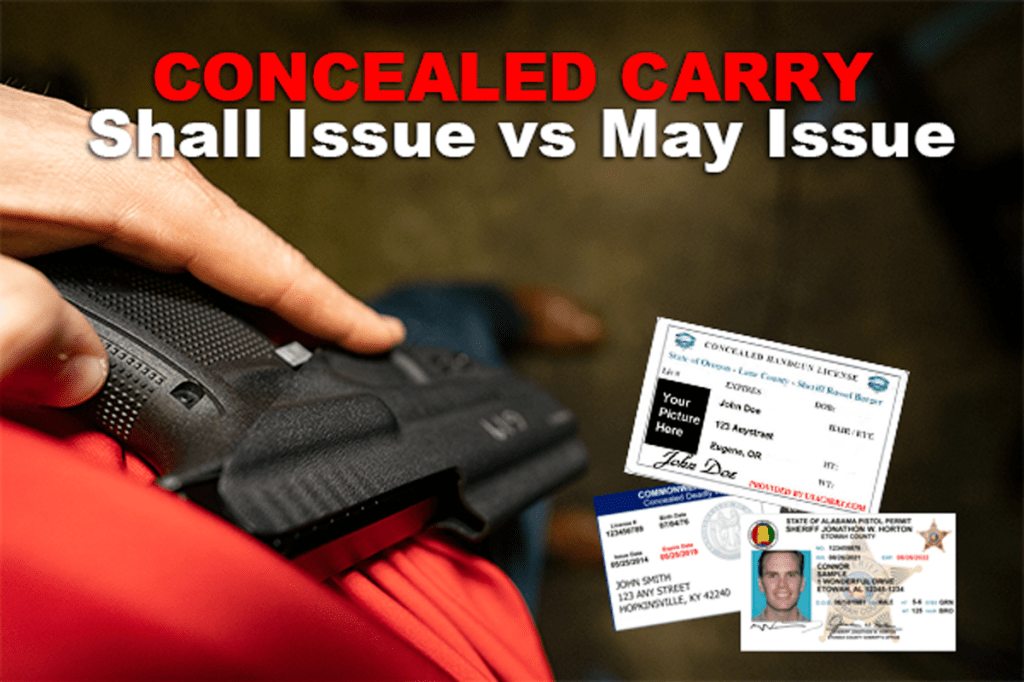
As of the most recent updates, “may issue” concealed carry licensing — where the issuing authority has discretion to approve or deny a permit even if the applicant meets all legal requirements — is rare in the U.S. The remaining states (and jurisdictions) that still operate under a may‑issue framework are:
- California
- Connecticut
- Delaware
- Hawaii
- Maryland
- Massachusetts
- New Jersey
- New York
- Rhode Island
In these places, prior to Bruen, applicants often had to demonstrate “good cause” or a “proper reason” to carry a concealed firearm, and local authorities issue permits based on subjective criteria, or make a subjective decision based on no criteria. Under Bruen, Massachusetts is undoubtedly the latter category, notwithstanding what the Mass Supreme Judicial Court has said on the issue. The fact is Bruen forbids ALL discretionary licensing decisions made without reference to any objective criteria.
Here’s how “good cause” (or similar discretionary standards) have traditionally been applied in the remaining may‑issue states and jurisdictions — and how the NYSRPA v. Bruen decision has shifted things:
📜 State‑by‑State Overview
| State / Jurisdiction | Traditional “Good Cause” Standard | Post‑Bruen Impact |
|---|---|---|
| California | Applicants historically had to show a specific, documented need beyond general self‑defense — e.g., credible threats, carrying large sums of cash for work. Sheriffs and police chiefs had wide discretion. | After Bruen, the “good cause” requirement was struck down. CA now issues on a “shall issue” basis if objective criteria (training, background check) are met, but still enforces strict location bans. |
| Connecticut | Technically “may issue,” but most towns issued permits if statutory requirements were met. Some local authorities still asked for letters of need or character references. | In practice, operates much like “shall issue” now; discretionary denials are rare. |
| Delaware | Required newspaper publication of intent to apply and endorsements from five citizens, plus proof of need. Judges could deny without explanation. | The “need” element is under legal scrutiny; issuance is trending toward objective criteria. |
| Hawaii | Required proof of “urgency” or “reason” — often interpreted so narrowly that almost no civilian permits were issued. | Courts have forced compliance with Bruen, leading to more permits being granted, though local police still impose extensive training and location restrictions. |
| Maryland | “Good and substantial reason” standard — e.g., documented threats, business cash handling. | Requirement removed post‑Bruen; now “shall issue” if statutory requirements are met. |
| Massachusetts | “Proper purpose” standard; self‑defense was sometimes accepted, sometimes not, depending on the licensing authority. | Discretion over “good cause” removed; still retains suitability checks and training mandates. Under Bruen, Massachusetts’ subjective licensing is invalid, notwithstanding what the Mass Supreme Judicial Court has said on the issue. The fact is Bruen forbids ALL discretionary licensing decisions made without reference to any objective criteria. |
| New Jersey | “Justifiable need” — required proof of specific threats or prior attacks, often with police reports. | Requirement eliminated; issuance now based on objective criteria, but with strict sensitive‑place laws. |
| New York | “Proper cause” — applicants had to show a special need distinguishable from the general public. | Bruen struck this down; NY replaced it with extensive training, interviews, and location bans. |
| Rhode Island | Two systems: local police (may issue) and attorney general (shall issue). Local “good reason” standard varied by town. | Pressure from litigation has pushed most issuance toward objective standards. |
💡 Key takeaway: While these states are still sometimes labeled “may issue” in older guides, Bruen has effectively forced them to drop subjective “good cause” requirements.
 MA GUN LAWYER
Leave a comment